AI Subprocessor Risk: What to Review First
A practical guide to mapping the vendors, data flows, retention, access, and contracts behind an AI workflow.
You can approve an AI vendor, review its contract, and read its security materials, yet still not know every organization that processes your business data. The service may rely on a model provider, cloud platform, database, logging system, identity service, support vendor, or analytics platform.
That is AI subprocessor risk. The security boundary does not end at the company on the invoice. Modern AI systems are supply chains, and your review needs to follow the data through the chain.
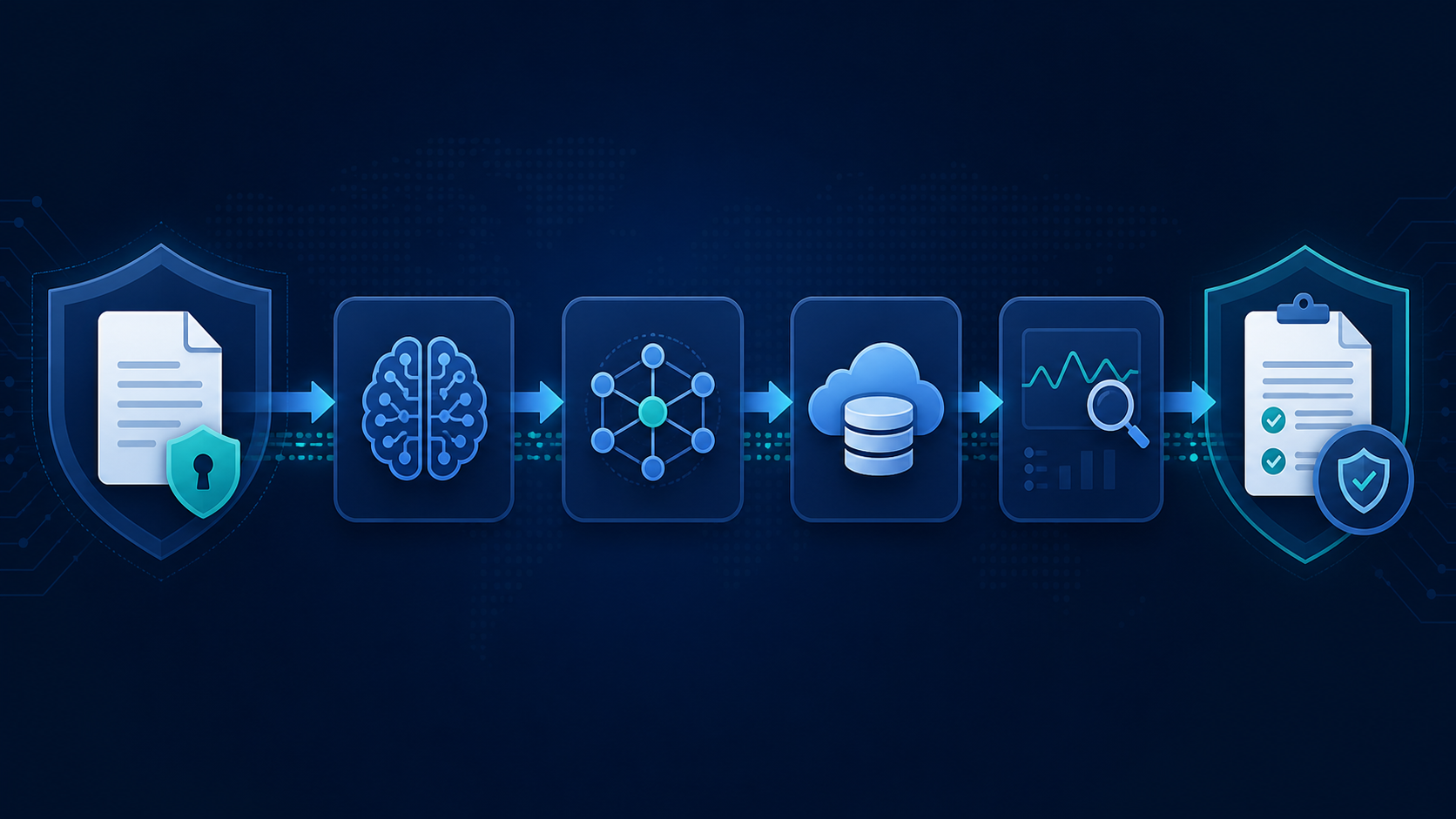
Start with the data flow
Do not assess a vendor in the abstract. Map one specific workflow first:
- Identify the user and the AI application.
- Identify every source of prompts, uploads, retrieved context, and connected data.
- Identify the model provider, vector database, logging platform, cloud provider, and support tools.
- Record what data each service receives and whether it stores, processes, or can access it.
The question is not “Who did we buy the software from?” It is “Which organizations can process this data while this workflow runs?”
Make the subprocessor inventory useful
List more than company names. Add the service’s purpose, the data it receives, location, retention, training terms, and human access. A logging provider storing full prompts needs a different review from a billing provider receiving an account ID.
For example:
| Service | Purpose | Data received |
|---|---|---|
| AI application | User interface | User input and account data |
| Model provider | Inference | Prompt and retrieved context |
| Vector database | Retrieval | Embeddings, text, and metadata |
| Logging platform | Troubleshooting | Prompts, outputs, and traces |
| Support system | Customer support | Account and diagnostic data |
RAG systems deserve special care. Do not assume embeddings are harmless. They may represent sensitive text, metadata, user identifiers, or access-control information and should be treated as part of the protected dataset.
Review retention, training, and location separately
Ask the same question of every material component: what happens to the data after the request is complete?
Different data types can follow different rules. A prompt might be stored temporarily for abuse detection, an uploaded document retained until deletion, a trace kept in an observability platform, and a backup retained until expiry. Document those differences in a retention map.
Do not combine model training, product improvement, abuse detection, human review, feedback collection, logging, and analytics into one question. The contract and the exact service terms should answer each purpose separately.
Similarly, “stored in Canada” does not necessarily mean “processed only in Canada.” Identify where production data is stored, where it is processed, where support personnel may access it, and where subprocessors operate. If your organization has a residency requirement, state it as an architecture requirement before selecting the technology.
Assess security controls across the chain
Review encryption in transit and at rest, identity controls, MFA, role-based access, privileged access, tenant isolation, vulnerability management, incident response, and independent assurance evidence across the full chain.
AI feels automated, but people still operate the environment. Ask whether vendor or subcontractor personnel can access prompts, uploaded files, chat histories, logs, support tickets, or outputs. Confirm the circumstances, roles, approval process, logging, and duration of that access.
Keep the review current
A vendor review captures a point in time. The architecture can change when the vendor adds a cloud service, model provider, analytics platform, support vendor, or region.
Record how changes are announced, how much notice you receive, whether you can object, and who internally assesses the security, privacy, contract, residency, and business impact. Do not route these notices to an unmonitored inbox.
Know when to stop
Not every risk should end a project. Some should block it until the architecture or vendor changes:
- Unknown subprocessors handling sensitive business data.
- Undefined retention for confidential data.
- Training terms that conflict with the approved use case.
- Data processing that violates a legal, contractual, or customer residency requirement.
- Weak incident obligations for a vendor handling material data.
AI subprocessor risk checklist
- Document the use case and data flow.
- Obtain the current subprocessor list.
- Identify model, cloud, retrieval, logging, and support providers.
- Record the data each provider receives.
- Confirm retention, deletion, backups, training, and human-access terms.
- Review security controls and incident obligations.
- Record data residency and transfer requirements.
- Assign an owner for material changes and periodic reassessment.
An AI system does not become safe because one vendor passed your review. It becomes manageable when you can show where the data goes, which organizations process it, what controls apply, and who owns the decision when the architecture changes.
QuantM helps Canadian SMBs connect AI governance with identity, Microsoft 365, cybersecurity, and documented business controls. Start with a free AI readiness assessment to identify the first control gaps to address.