AI Output Validation: What to Check Before AI-Generated Work Leaves the Business
Use a six-part review to check facts, sources, sensitive data, policy, tone, and actions before AI-generated work leaves the business.
AI output validation is the process of checking whether generated content is accurate, supported, appropriate, and safe before the business uses or sends it. The required review depends on the consequence of an error. A meeting-note summary needs a different gate from legal research, financial advice, a client report, or an action taken by an AI agent.
The purpose is not to prove that every AI response is perfect. It is to keep unsupported claims, sensitive information, policy violations, and unsafe actions from representing the company.
Start by rating the consequence
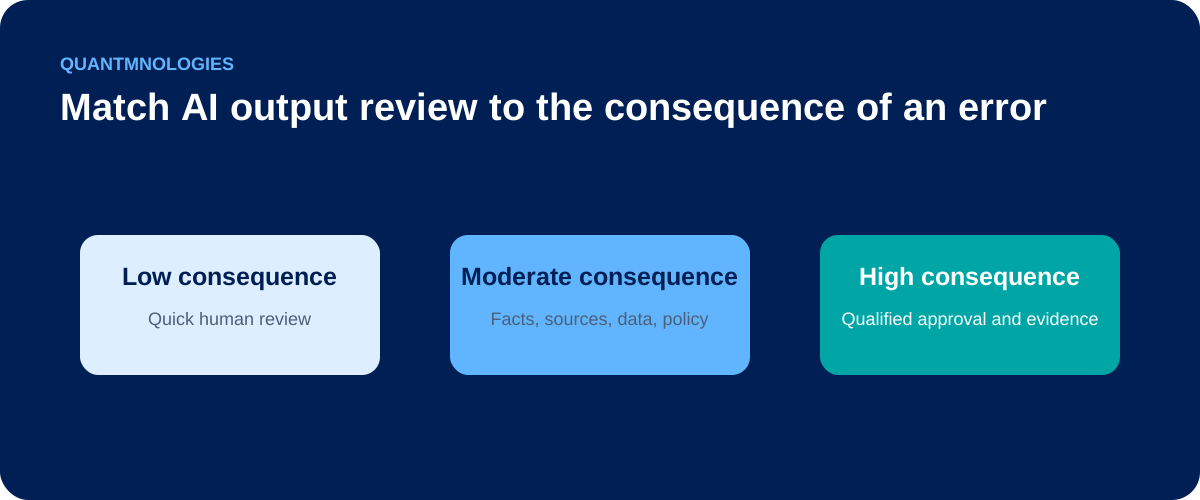
| Consequence level | Typical use | Required review |
|---|---|---|
| Low | Brainstorming and internal formatting | Quick human review |
| Moderate | Internal analysis and sales material | Facts, sources, completeness, and sensitive-data review |
| High | Client deliverables, security actions, and external communications | Qualified approval and retained evidence |
Use three review levels.
Low consequence
Examples include brainstorming, internal formatting, and early drafts that a person will rewrite. A quick human review may be enough.
Moderate consequence
Examples include internal analysis, sales material, process guidance, and summaries used for decisions. Check facts, sources, completeness, and sensitive information.
High consequence
Examples include client deliverables, legal or financial content, security actions, health information, access changes, and external communications. Require a qualified reviewer and preserve evidence of approval.
Six checks before release
1. Does it answer the right question?
An answer can be well written and still solve the wrong problem. Compare it with the original request, audience, and expected outcome.
2. Are important claims supported?
Identify names, dates, statistics, quotations, regulations, product capabilities, and factual conclusions. Verify them against approved sources. Do not accept a citation because it looks credible.
3. Did it add or expose sensitive information?
Check for client names, personal information, credentials, internal links, financial details, confidential terms, and content retrieved from a source the recipient should not see.
4. Does it follow business policy?
Review approved language, legal restrictions, client commitments, records requirements, and rules for AI disclosure where applicable.
5. Is the tone appropriate?
Confirm that the content is clear, calm, and suitable for the recipient. Remove overconfident language when the evidence is uncertain.
6. Is the proposed action safe?
If the output triggers a tool or workflow, inspect the exact action, target, permissions, and consequences. Require approval before state-changing or external actions.
Build validation into the workflow
A reminder to “check AI work” is difficult to apply consistently. Define the gate in the process:
- Mark the content's consequence level.
- Identify the required checks.
- Assign an appropriate reviewer.
- Record the sources used.
- Approve, return for correction, or reject.
- Keep an audit record for higher-risk work.
Automated checks can identify missing fields, restricted terms, sensitive-data patterns, unsupported formats, or policy violations. Human review is still needed when judgment, client context, or accountability matters.
FAQ
Is output validation the same as fact-checking?
Fact-checking is one part. Validation also covers sensitive data, policy, audience, tone, completeness, and any action the output may trigger.
Can another AI validate the first AI?
It can support the review, but it should not be the only control for higher-risk work. A second model can repeat or introduce errors.
Who should approve client-facing output?
The reviewer should understand the subject, the client context, and the consequence of an error. Approval should follow the business's existing accountability structure.
Before AI-generated work leaves your business, define what must be true, who checks it, and what evidence is retained.
Put this control into practice
Start with one AI workflow that handles sensitive, operational, or client information. Document its fact checks, data review, and release approval. Test the process with a normal request, an unsafe request, and an error case before expanding its use.
QuantM helps Canadian SMBs connect AI governance with identity, Microsoft 365, cybersecurity, and documented business controls. Start with a free AI readiness assessment to identify the first control gaps to address.