Benefits of 24/7 Threat Monitoring for SMBs
The benefits of 24/7 threat monitoring for SMBs start with one basic fact: attackers do not work on your business schedule. They move at night, on weekends, and during holidays, when smaller teams are least able to spot and investigate...
Introduction
The benefits of 24/7 threat monitoring for SMBs start with one basic fact: attackers do not work on your business schedule. They move at night, on weekends, and during holidays, when smaller teams are least able to spot and investigate unusual activity. That timing is deliberate.
For many SMBs, owning the right tools is only part of the equation. The bigger question is whether anyone is actively watching, interpreting, and responding when those tools raise warning signs. Antivirus, email security, MFA, and backups all matter. But if no one is monitoring alerts around the clock, a threat can move from suspicious behavior to real business disruption before anyone starts responding.
That is why continuous security monitoring for small business matters more than any single tool. NIST defines information security continuous monitoring as maintaining ongoing awareness of security, vulnerabilities, and threats to support risk-based decisions. The definition describes a discipline, not a product, and it applies directly to SMBs.
Why 24/7 Threat Monitoring Matters for SMBs
Most SMBs do not have an internal security operations center. They do not have analysts reviewing endpoint alerts at 2:00 a.m. or correlating identity anomalies, endpoint behavior, admin actions, and login spikes across multiple systems in real time. That is not a criticism. It reflects the reality of how smaller IT teams are structured and what they are asked to cover.
That gap matters because modern attacks rarely unfold as a single event. CISA's ransomware guidance describes a pattern that can include initial access, privilege escalation, lateral movement, and then data theft or encryption. Each stage takes time, which gives defenders a window to act.
Around the clock threat monitoring helps SMBs use that window. It gives the business a real chance to catch attacker activity during early stages, before systems are locked, accounts are hijacked, or customers are affected. Without it, most SMBs are reacting to confirmed damage rather than stopping activity in progress.
Earlier detection gives defenders more time to contain an incident before it affects additional accounts, devices, or business services.
The Real Benefits of 24/7 Threat Monitoring for SMBs
Faster Detection When Timing Matters Most
The first benefit is speed. 24/7 threat monitoring for SMBs reduces the gap between suspicious activity and human review, and that gap is where most attacks find room to grow.
A failed login pattern at midnight may sit untouched until morning in a typical setup. With continuous monitoring, that same pattern can be reviewed quickly, investigated, and escalated before an attacker gains a larger foothold. Password-spray attempts often run at scale across many accounts, which makes prompt review and containment especially important.
Better tools matter, but speed of detection depends on having analysts actively working through what those tools are reporting, around the clock.
Quicker Containment Before Attackers Spread
Catching a threat early only changes the outcome if it triggers a response. One of the strongest benefits of 24/7 threat monitoring for SMBs is the ability to contain threats before they move across the environment.
If a monitored environment shows suspicious PowerShell activity, unusual privilege changes, impossible travel, or lateral movement between devices, a capable monitoring team can investigate quickly and trigger response steps: isolating hosts, disabling compromised accounts, or blocking active connections. CISA's ransomware guidance makes clear that attackers commonly move laterally across the network well before encryption or extortion begins. Catching that movement early can keep one compromised endpoint from becoming a business-wide incident.
A standalone detection tool can flag the activity. Only a monitored service with response capabilities can act on it.
Protection Outside Business Hours
A lot of SMBs are well-covered during office hours. Nights, weekends, and holidays become blind spots. From an attacker's point of view, those hours are useful precisely because defenders are slower to react.
Continuous monitoring changes that. It does not just mean logs are being collected overnight. It means alerts are being reviewed, prioritized, and escalated when they happen, not when someone gets to the inbox the next morning.
For SMBs without overnight staff, this coverage is the hardest thing to replicate with internal resources alone.
Reduced Alert Fatigue for Internal Teams
Internal IT staff at SMBs already handle support tickets, onboarding, patching, vendors, device issues, and cloud administration. They typically cannot spend hours each day triaging security noise alongside everything else. Continuous monitoring through an MDR service helps reduce that burden by filtering false positives, validating meaningful alerts, and focusing attention on the events that actually need action.
Internal teams can stay focused on keeping the business running. Security events get reviewed without waiting for someone to have a spare hour in their day.
Broader Visibility Across Endpoints, Identities, and Cloud
Good 24/7 monitoring connects signals across endpoints, Microsoft 365 or Google Workspace, identity providers, cloud environments, firewalls, and email systems. That breadth matters because real attacks rarely stay in one lane.
NIST's guidance on continuous monitoring centers on maintaining awareness of threats, vulnerabilities, assets, and control effectiveness across the whole environment, not just one layer of the stack. SMBs need that same connected view, even at smaller scale. A login anomaly in Azure AD, combined with unusual PowerShell activity on an endpoint, tells a different story than either alert would tell alone.
Stronger Support for Incident Response and Recovery
Monitoring helps before an incident, during an incident, and after. When something does go wrong, a monitored trail of activity helps answer the questions that matter most: which account was used first, which device was accessed next, whether data was likely exfiltrated, and whether the attacker is still active.
That information speeds up decision-making and improves communication with leadership, cyber insurers, legal counsel, and outside responders. It also matters for compliance and regulatory obligations, where documentation of what happened and when can make a material difference in how an incident is resolved.
What 24/7 Monitoring Looks Like in Practice
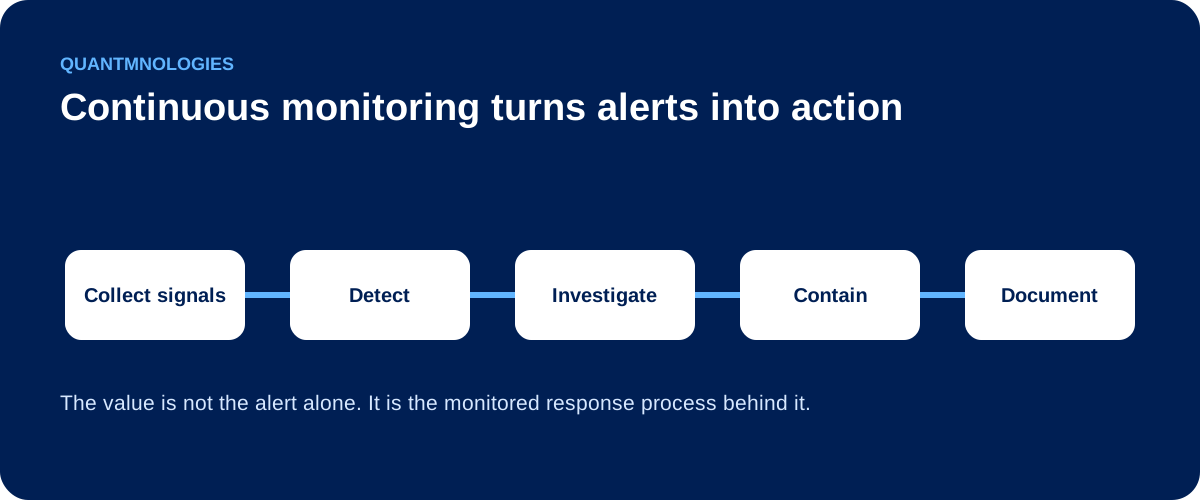
For an SMB, 24/7 monitoring should function as a managed security operation, not just a dashboard to log into. In practice, that means continuous alert review, threat validation, cross-tool correlation, documented escalation paths, and response support when something real appears.
A solid MDR monitoring service covers suspicious sign-in activity, endpoint behavior, privilege escalation attempts, persistence mechanisms, lateral movement between systems, and early signs of ransomware staging. It also produces clear, regular reporting so the business knows what was detected, what was contained, and what still needs follow-up.
MDR works because of what it combines: telemetry, analyst review, detection logic, and active response, running continuously. Here is what that workflow looks like from alert to action:
- Review: an analyst assesses whether the alert is expected activity or needs investigation.
- Correlate: relevant identity, endpoint, email, and network events are compared.
- Escalate: the business is notified according to agreed severity and contact rules.
- Contain: authorised actions can include isolating a device, disabling an account, or blocking a connection.
- Document: the team records the timeline, affected assets, actions, and follow-up work.
That sequence runs continuously. No gaps for weekends, holidays, or after-hours coverage.
What SMBs Miss Without Continuous Monitoring
Without continuous monitoring, many SMBs carry a false sense of security. Tools are in place, but there is no reliable way to interpret events fast enough to stop an active threat.
In practice, the gaps often look like this:
- Unread alerts sitting in a queue until the next morning, by which point the attacker has moved on
- Suspicious activity treated as an isolated technical issue rather than part of an attack chain
- After-hours signals that nobody has time or capacity to investigate
- Attackers using those extra hours to move laterally, exfiltrate data, or stage encryption
CISA's ransomware guidance makes clear that these stages typically happen before the visible damage begins. The encryption event that shuts down operations is usually the end of a process that started hours or days earlier.
Those lost hours are expensive. For a small business, the difference between same-hour response and next-day response can affect total downtime, recovery cost, customer trust, and legal exposure. Cyber insurance carriers are paying closer attention to detection and response capabilities at renewal time: coverage and premiums are increasingly tied to whether monitoring controls are in place and active.
How to Choose the Right MDR Monitoring Partner
If you are evaluating MDR providers, do not stop at the phrase "24/7 monitoring." Two providers can both use that term and deliver very different things.
Ask these questions directly:
- Who reviews alerts? Are humans actively triaging events, or is alert review automated with no analyst involvement?
- What data sources are covered? Endpoints only, or also Microsoft 365, identity providers, cloud workloads, and email?
- How does escalation work? What triggers a call or a notification to your team, and how fast does that happen?
- What response actions can the provider take? Can they isolate a host or disable an account, or do they only report what they saw?
- How quickly do they engage on serious events? Response-time expectations and escalation contacts should be explicit in the service agreement.
The right partner reduces after-hours exposure and lowers the operational cost of maintaining coverage, without adding work to your internal team. That is the real business case for continuous security monitoring for small business. Learn more about managed detection and response for SMBs.
Get 24/7 MDR Monitoring for Your Business
The benefits of 24/7 threat monitoring for SMBs come down to one thing: reducing the time attackers have to operate inside your environment. That means detection when attacks actually happen, containment before they spread, and response that does not wait for Monday morning.
If your business has security tools in place but no true around the clock monitoring and response, QuantM can help. Our MDR monitoring services give SMBs continuous visibility, faster detection, and response support built for real-world business risk.
Start with a free 15-minute M365 Posture Review to see what is visible in your tenant today, including identity, email, and response-readiness gaps.